Rolex Daytona 126502 Rolesium: Grand Feu Enamel, Tungsten Ceramic, and a See-Through Back on a Steel Daytona
Everything about the most technically ambitious Daytona Rolex has ever put in a steel-based case — the enamel dial, the new ceramic, the open caseback, the price question, and what it actually means for collectors.
Rolex Cosmograph Daytona ref. 126502 Rolesium — introduced at Watches & Wonders 2026, Geneva. Video: Rolex.
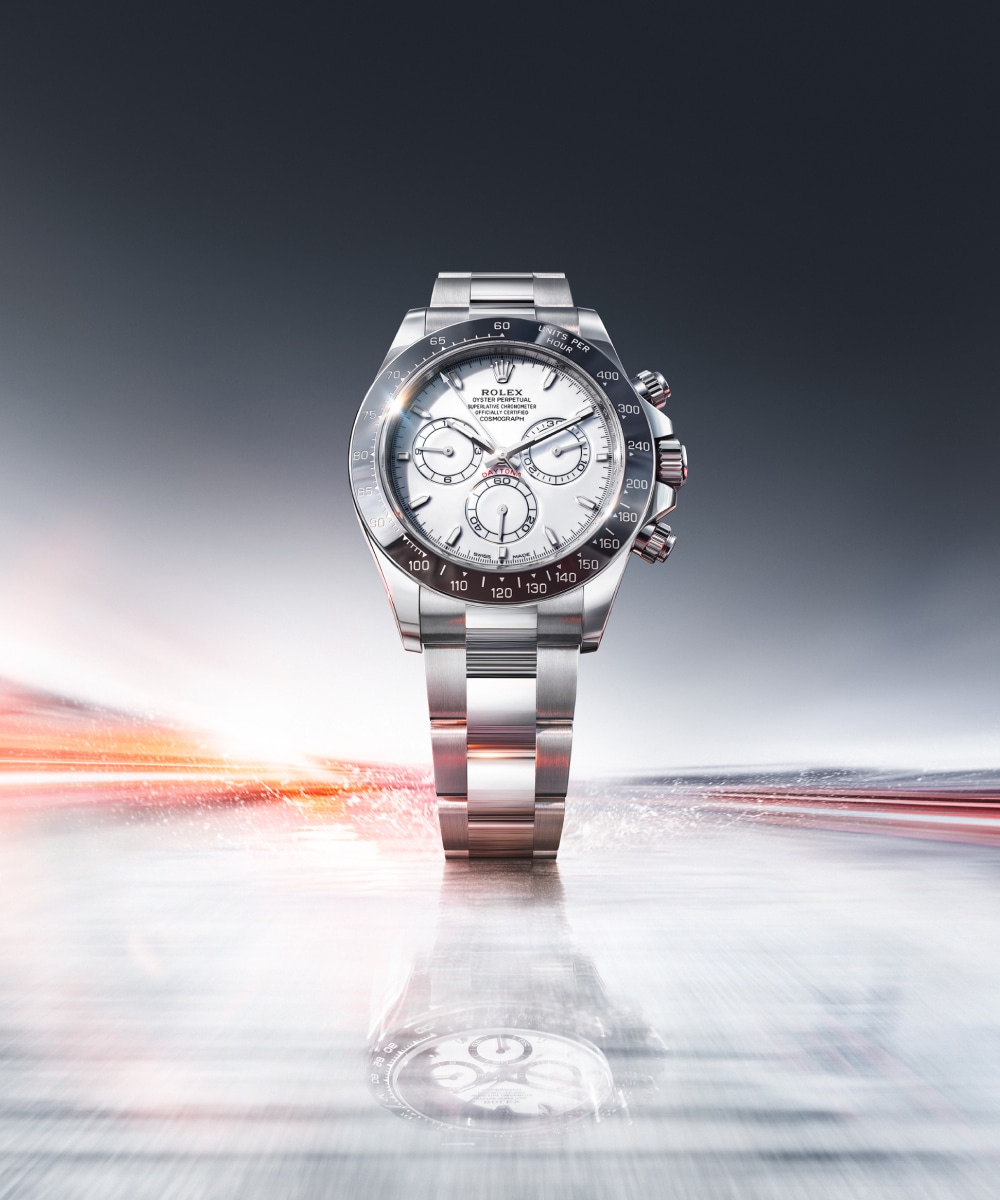
The Rolex Cosmograph Daytona ref. 126502 is an off-catalogue, Rolesium-configuration Daytona unveiled at Watches & Wonders 2026. It pairs an Oystersteel case with 950 platinum bezel ring and caseback ring, a white Grand Feu enamel dial (a first for a steel-based production Daytona), an anthracite grey Cerachrom bezel in a newly developed tungsten carbide–enriched ceramic, and an exhibition sapphire caseback — also a first for any steel-case Daytona. Calibre: 4131, 72-hour power reserve. Price: $57,800 USD. Off-catalogue, meaning controlled production and no standard AD allocation.
What Is Rolesium — and Why Does It Matter on a Daytona?
“Rolesium” is not a new alloy. The name was registered by Rolex founder Hans Wilsdorf in 1932 and currently designates Rolex’s combination of Oystersteel with 950 platinum. It has appeared on the Yacht-Master since 1999 — the 40mm Yacht-Master in Oystersteel with a platinum bezel is the most familiar Rolesium reference in the current catalogue. But it has never appeared on the Cosmograph Daytona. Ref. 126502 changes that.
The material logic is simple: platinum is used precisely where it matters most visually. The bezel ring — the thin band that frames the Cerachrom tachymeter insert — is 950 platinum. The caseback ring that holds the sapphire exhibition window is also 950 platinum. The middle case, lugs, and three-link Oyster bracelet remain Oystersteel. The result is a watch that reads as steel from a distance but reveals its elevation on closer inspection: the platinum frames the watch’s two most visually distinct elements, giving both an almost photographic quality of definition.
On the wrist, the Rolesium effect is subtle but present. The platinum ring catches light at a slightly different warmth than the Oystersteel case — a visual separation that collectors who know what they’re looking at will notice immediately. Those who don’t will simply register that the watch looks more finished, more deliberate, without quite identifying why.
The Case: An Exhibition Back on a Steel Daytona
The core architecture of the 126502 is the 40mm Oyster case introduced with the 2023 Daytona generation — the same monobloc Oystersteel middle case that defines the current ref. 126500LN. It measures 40mm across and 11.9mm thick, maintains 100-metre water resistance with screw-down pushers and a Triplock screw-down crown, and carries Chromalight luminous material on the white gold hands and applied hour markers. Nothing about the case engineering has changed from the current platform.
What is genuinely new is the back. The 126502 is fitted with a sapphire exhibition caseback — the first time a Daytona in a predominantly steel case has ever received one. Previously, the see-through caseback was reserved for the full platinum Daytona (introduced 2023) and the Le Mans white gold edition. The caseback ring itself is 950 platinum, which is where the Rolesium designation is partially earned and where the finishing difference from a standard Daytona becomes tactile as well as visible.
The Rolex Daytona 126502 marks three simultaneous firsts: (1) the first Daytona in Rolesium (Oystersteel with platinum), (2) the first steel-based Daytona with a Grand Feu enamel dial in standard production, and (3) the first predominantly steel Daytona with an exhibition sapphire caseback. None of these had appeared on the Daytona in anything other than full precious metal configurations before.
The Bezel: A New Ceramic Formula and a Vintage Tachymeter
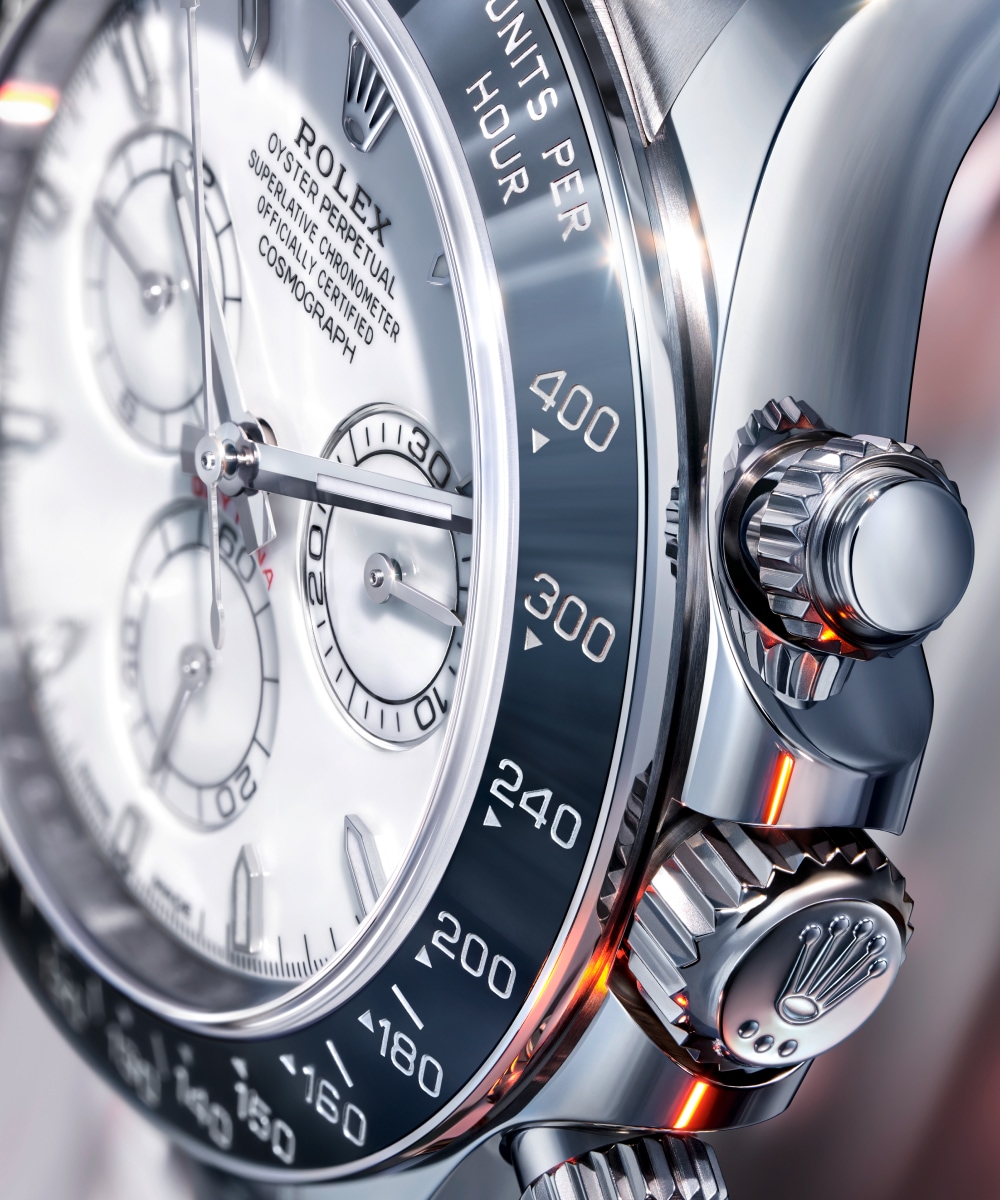
The bezel of the 126502 is one of the most technically interesting elements of the watch, and one of the easiest to misread in photographs. It looks grey. Not simply grey. It is a newly developed Cerachrom ceramic formulation enriched with tungsten carbide — a material not previously used in Rolex’s ceramic bezel production — which introduces a faint metallic shimmer across the surface that standard Cerachrom does not produce. This gives the anthracite finish a density and warmth that shifts subtly depending on light conditions.
Rolex developed this ceramic specifically for the 126502. Tungsten carbide is an extremely hard, dense compound typically associated with industrial tooling and cutting inserts. Its introduction into a Cerachrom bezel formula is a materials engineering achievement that goes well beyond a colour adjustment. Against the standard black Cerachrom of the 126500LN, the difference in visual character is real: the 126502’s bezel reads as darker steel rather than ceramic black, which changes the entire tonal relationship with the case.
The Tachymeter Scale Redesign
The tachymeter scale on the 126502 departs significantly from the current-generation Daytona’s bezel design. A standard 126500LN uses a contemporary scale with triangular pointer markers, radially-positioned numerals, and a graduation sequence that jumps from 160 to 140 without intermediate marks. The 126502 returns to a vintage-inspired layout modelled on the original 1963 Cosmograph: intermediate baton markers between the primary numerals, small dots flanking each number, horizontally engraved lettering (rather than radial), and a 160–150–140 graduation sequence that includes the 150 mark missing from modern bezels.
The engravings are coated in platinum via physical vapour deposition — a process that deposits a thin layer of platinum metal into the recessed tachymeter graduations with exceptional adhesion and an almost glassy surface finish. Against the anthracite ceramic, the platinum reads as a warm, slightly luminescent silver that ties the bezel visually to the platinum caseback ring framing it.
The Dial: Why Grand Feu Enamel Is Different
Every other steel Daytona in Rolex’s production history has used either a lacquered dial or a metallic dial in silver or black. The 126502 uses Grand Feu enamel — and understanding what that actually is makes the case for why this dial matters far more compellingly than the price tag alone.
“Grand Feu” — literally “great fire” in French — describes an enamel application process in which powdered glass is applied to a substrate, then fired in a kiln at very high temperatures, typically above 800°C. The molten glass fuses to the substrate and, on cooling, forms the characteristic glassy, deeply smooth surface with a visual depth that lacquer cannot replicate no matter how many layers are applied. Each firing introduces risk: thermal stress can crack the plate, the enamel can bubble, the colour can shift. Even a single-layer Grand Feu enamel dial carries a significant rejection rate in production.
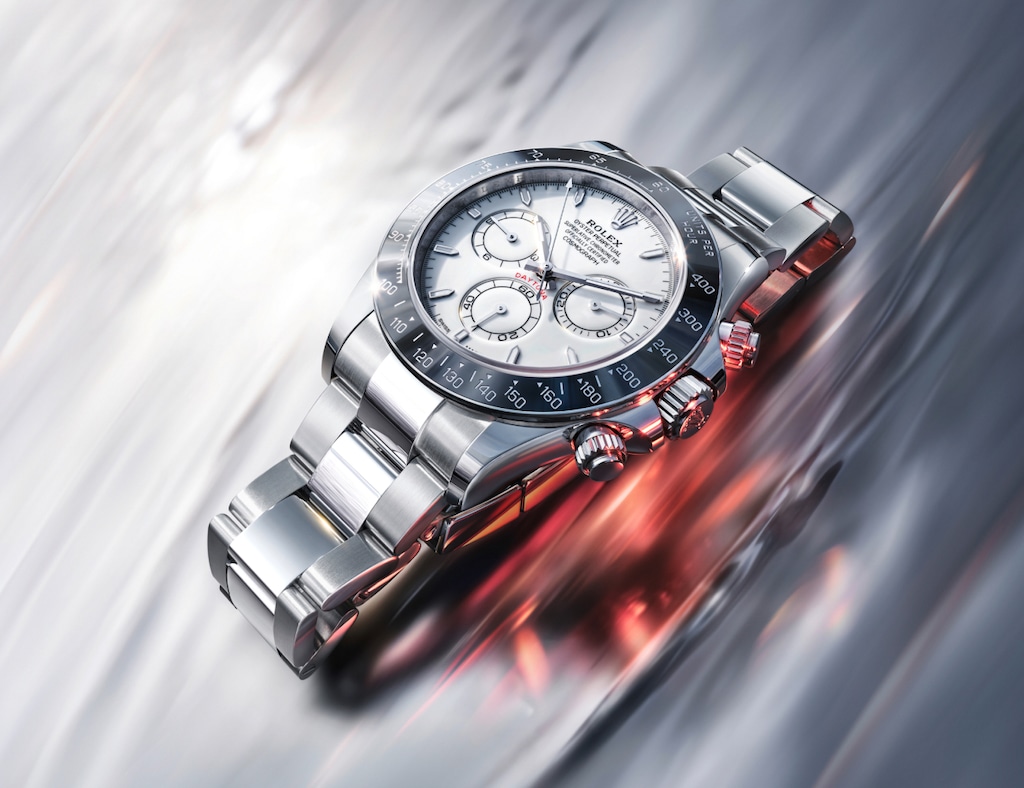
Rolex’s approach on the 126502 is more technically demanding still. The dial is a four-piece assembly: the main dial plate is a ceramic base coated with white enamel and fired separately from the three subdial registers, which are each their own ceramic plates with their own enamel layers. All four pieces must match exactly in tone, gloss, and depth before being assembled onto a brass base. The failure rate across four separate firings that must all succeed — and succeed identically — is considerably higher than a single-plate enamel dial. The result is a surface with a whiteness that is almost luminous in its purity, markedly different from the chalky white of the standard Daytona panda dial in direct comparison.
Previous standard-production Daytonas in steel have always contrasted the main dial with the subdials — white dial with black registers, or black dial with silver registers. The 126502 breaks this convention entirely: the enamel covers both the main dial and all three subdials in matching white, creating a fully monochromatic layout that the watch community has already nicknamed the “Albino” configuration. The closest historic parallel is the so-called “porcelain dial” of the Zenith-era Daytona ref. 16520 from the late 1980s, which featured a similar all-white dial without contrasting subdial rings. Rolex has not explicitly referenced the 16520 in its communications, but the visual echo is unmistakable and understood by everyone who knows the Daytona lineage.
Calibre 4131: Through the Exhibition Caseback
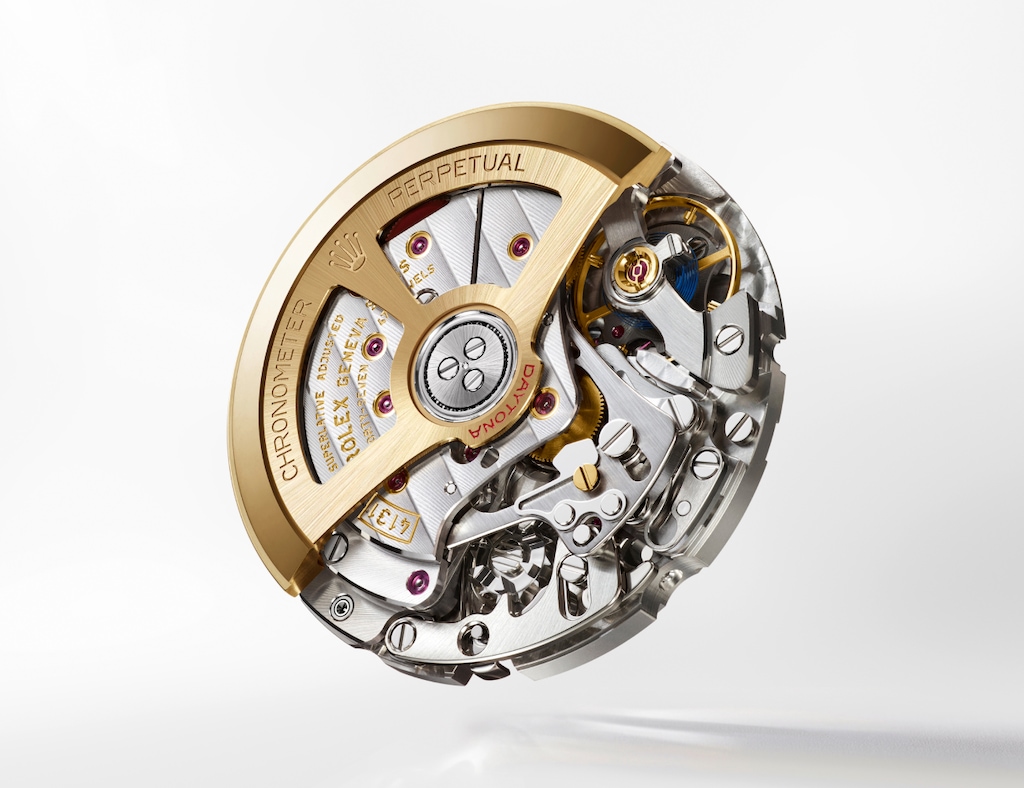
The movement powering the 126502 is the calibre 4131 — the same in-house automatic chronograph introduced with the 2023 Daytona generation. What is different here is that you can see it through the sapphire caseback, and what you see is finished to a standard normally reserved for Daytona references in precious metals.
The bridges carry Côtes de Genève decoration — parallel wave-polished striations that catch light differently from every angle. The oscillating weight is a skeletonized yellow gold rotor, a detail that generates considerable visual impact through the caseback and which does not appear on standard steel Daytona references. The contrast between the yellow gold rotor and the decorated bridges visible through platinum-framed sapphire is one of those details that rewards the collector who goes looking for it.
Calibre 4131 — Full Technical Specification
The Chronergy escapement uses a nickel-phosphorus alloy that is both antimagnetic and significantly more efficient than a traditional Swiss lever escapement — Rolex claims approximately 15% better energy transfer, which is a meaningful contributor to the 72-hour power reserve. The blue Parachrom hairspring is 10 times more resistant to magnetic fields than standard silicon or steel hairsprings and 50% more resistant to shocks. Combined, these elements deliver a movement that is as close to maintenance-free as any chronograph mechanism in production watchmaking.
The Vintage References It Echoes
Part of why the 126502 landed so well with collectors who know the Daytona deeply is that it doesn’t chase nostalgia superficially — it pulls specific design details from three distinct eras of the reference’s history and integrates them into a contemporary package. Understanding those connections tells you why certain details were chosen and why they matter.
The Original Cosmograph
The first Daytona with the Cosmograph name. Available with a black acrylic bezel insert — which is the visual predecessor to the 126502’s anthracite ceramic. The bezel tachymeter scale with horizontal numerals and intermediate baton marks on the 126502 is directly modelled on the original 1963 bezel design.
The Oyster Cosmograph
First Daytona with the Oyster case, screw-down pushers, and screw-down crown. The 126502’s vintage-inspired bezel scale nods to the later acrylic insert bezels of this generation, which carried similar dot and baton intermediate markers. The choice of Oyster bracelet on the 126502 rather than Jubilee echoes this era’s bracelet pairing.
The Porcelain Dial Connection
The El Primero–powered Zenith-era Daytona is the closest visual ancestor of the 126502’s white dial. Early 16520 examples featured a “porcelain” or “milk” dial — a stark white with white matching subdials — that is virtually identical in concept to the 126502’s monochromatic enamel layout. Rolex hasn’t acknowledged this connection publicly, but the collector community has made it immediately and unanimously.
The Platinum/Exhibition Era
The full platinum Daytona introduced the exhibition caseback to the modern collection in 2013. The 126502 borrows this feature — previously exclusive to precious metal Daytonas — for the first time in a steel-based configuration, using the platinum caseback ring as both structural and visual justification for the Rolesium designation.
The Price: $57,800 for a Steel Daytona
The price of the 126502 is the most discussed aspect of the release, and it deserves a straightforward examination rather than deflection. At $57,800, the Daytona 126502 costs more than Rolex’s own solid 18k yellow gold Daytona and within a few hundred dollars of the solid Everose gold Daytona. It is more than three times the price of the standard steel Daytona 126500LN. For a watch that is predominantly steel with relatively small platinum accents at the bezel ring and caseback ring, this pricing requires justification.
| Reference | Configuration | Retail Price | Notes |
|---|---|---|---|
| 126500LN | Oystersteel, black Cerachrom | $16,900 | Standard steel Daytona. Same cal. 4131. |
| 126505 | Everose gold, Oyster bracelet | $56,400 | Full 18k Everose. Lighter than 126502 by $1,400. |
| 126509 | White gold | $47,000 | Full 18k white gold. More metal, lower price than 126502. |
| 126502 | Rolesium (steel + platinum), enamel dial | $57,800 | Off-catalogue. Grand Feu enamel, tungsten ceramic, exhibition caseback. Subject of this article. |
| 126519LN | White gold, black Cerachrom | $47,250 | Full white gold with black bezel. Exhibition caseback. |
| 126506 | Full platinum | ~$80,000+ | The only Daytona above the 126502 in the precious metal hierarchy. |
Rolex’s justification rests on three points, and they are legitimate even if they don’t satisfy everyone. First: the four-piece Grand Feu enamel dial is genuinely expensive to produce at scale. The failure rate across four separate firings, the precision required for four pieces to match exactly, and the hand finishing of the enamel surface make this a considerably more costly dial than any lacquer or metallic alternative Rolex produces. Second: the new tungsten carbide Cerachrom formula represents material R&D investment that Rolex has amortised into this reference as its production launch vehicle. Third: as an off-catalogue release, the 126502 will be produced in quantities that are a fraction of the standard steel Daytona — the per-unit overhead of any limited production is higher than a mass-produced reference.
Whether those justifications are proportionate to the $40,900 premium over the standard steel Daytona is a question each buyer answers differently. For collectors who prize technical novelty and manufacturing achievement over metal weight, the case writes itself. For buyers who think in terms of precious metal content versus price, the watch presents differently.
Secondary Market Outlook
Off-catalogue Rolex Daytona references have a consistent historical pattern: initial scarcity drives secondary prices well above retail in the first months, the market finds a level as supply is absorbed into collections, and the reference stabilises at a long-term premium that reflects its rarity relative to the catalogue versions. The 126502 has all the demand drivers that have historically produced the largest premiums.
Early market analysis from WatchGuys places initial secondary pricing for the 126502 in the $80,000–$100,000 range, with some analyst projections extending to $120,000–$170,000 within the first year depending on supply. These figures are consistent with how other novel Daytona variants have behaved at launch: the turquoise dial ref. 126518LN (W&W 2025) traded at steep multiples of retail in its first months. The 126502 carries more demand drivers than that reference: a steel-based case (the Daytona’s most commercially desirable configuration), the enamel dial, and the open caseback. The off-catalogue status means production will be significantly constrained even by Daytona standards — themselves already among the most restricted of any production luxury watch.
126502 vs. 126500LN: How They Actually Compare
At first glance — and this is a point most coverage gets right — the 126502 is easily mistaken for the standard steel Daytona 126500LN in press photographs and even at a distance on the wrist. Both are 40mm Oystersteel Daytonas on Oyster bracelets running calibre 4131. Understanding what separates them at a detailed level is the difference between seeing the 126502 as an expensive steel Daytona and understanding it as a fundamentally different object.
- Bezel material: 126500LN uses standard black Cerachrom. 126502 uses a newly developed tungsten carbide–enriched anthracite Cerachrom made specifically for this reference.
- Bezel tachymeter design: 126500LN has contemporary radial numerals with triangular markers. 126502 has vintage-inspired horizontal engravings with baton markers and a 160–150–140 scale — a different design language entirely.
- Dial: 126500LN has a lacquered panda dial (white with black subdials) or black with silver subdials. 126502 has a four-piece white Grand Feu enamel dial with matching white enamel subdials — no contrasting rings.
- Caseback: 126500LN has a solid Oystersteel screw-down caseback. 126502 has a platinum-ring sapphire exhibition caseback.
- Rotor: 126500LN has a standard Oystersteel rotor. 126502 has a skeletonized yellow gold rotor visible through the caseback.
- Bezel ring and caseback ring: 126500LN is entirely Oystersteel. 126502’s bezel ring and caseback ring are both 950 platinum.
- Price: 126500LN retails at $16,900. 126502 retails at $57,800 — a $40,900 premium.
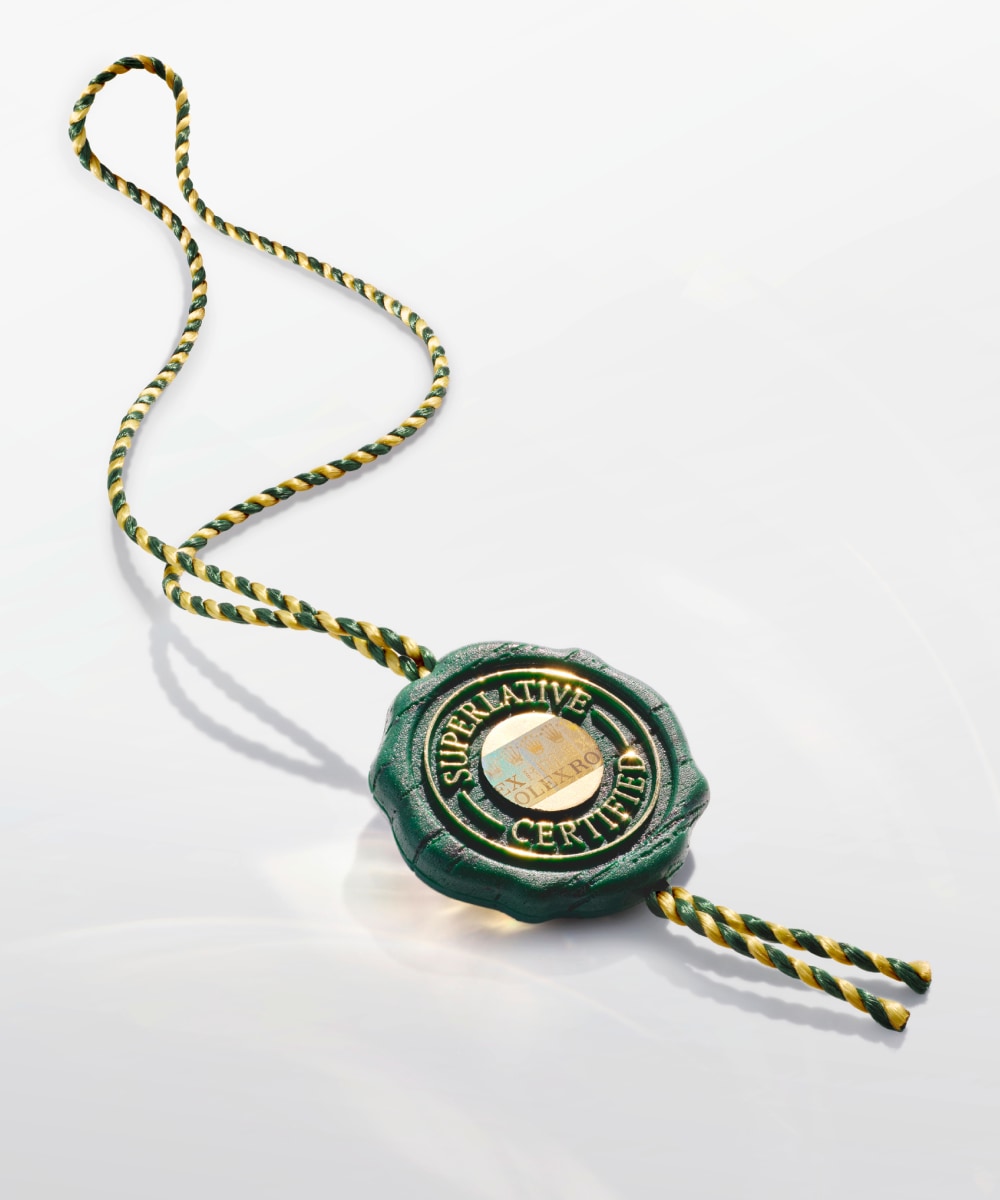
Because the Daytona 126502 is off-catalogue, it will not be available through standard AD allocation channels. When examples reach the secondary market, provenance documentation — particularly original Rolex box, warranty card, and any Rolex Certified Pre-Owned certification — will carry additional weight beyond what is typical for standard production references. Box-and-papers examples will command meaningful premiums over watch-only. For a reference at this price point, documentation integrity is especially important.
Selling a Rolex Daytona?
The 126502 will not be easy to acquire at retail. For most buyers, the secondary market will be the only realistic route — which means the Daytona owners in the best position right now are those who have an existing reference to sell or trade. Whether you have a standard 126500LN, a previous-generation 116500LN, or a vintage Daytona from earlier eras, the market for Daytona references of all kinds is active and liquid.
Selling Your Rolex Daytona?
We buy Daytona references across all generations — from the Zenith-era 16520 to the current 126500LN and everything in between. Reference-level pricing. Same-day response. No obligation.
Get a Free Offer Today →FAQ: Rolex Daytona 126502
Final Assessment: A Daytona That Earns Its Complexity
The Rolex Cosmograph Daytona 126502 is the most technically ambitious steel-based Daytona Rolex has produced. Three simultaneous firsts — Rolesium construction, Grand Feu enamel dial, exhibition caseback — in a single reference is not a coincidence or a marketing exercise. It is Rolex demonstrating, in the centenary year of the Oyster case, what the brand is capable of when it decides to push the Daytona in a direction it has never taken before.
The price is real, and the debate about it is legitimate. But the watch’s technical substance is also real — the enamel dial has a depth and quality that speaks for itself in person, the new tungsten ceramic shifts in light in ways that photographs struggle to capture, and the exhibition caseback with its yellow gold rotor and Côtes de Genève finishing is the kind of detail that belongs in the brand’s most exclusive references.
Whether the 126502 is worth $57,800 depends on what you are buying. If you are buying a steel Daytona with some platinum accents, the math doesn’t work. If you are buying the most technically layered Daytona ever made in a steel-based case — with a new material combination, a manufacturing-intensive dial, and off-catalogue rarity built in from the start — the number starts to make sense. The secondary market will settle the argument over the coming months. Based on the ingredients, it will settle in the watch’s favour.
Le Watch Buyers · New York · lewatchbuyers.com · Published April 2026. Technical specifications sourced from Rolex official product documentation and independently verified through industry reporting. All prices current at time of publication. Secondary market projections are estimates and do not constitute investment advice. “Rolex,” “Daytona,” “Calibre 4131,” “Rolesium,” “Cerachrom,” “Oystersteel,” “Chromalight,” “Parachrom,” “Superlative Chronometer,” and related terms are trademarks of Rolex SA. Le Watch Buyers is an independent watch buying service with no affiliation with Rolex SA.